
20
Years of Service
$100M
Recovered
99%
Success Rate
1000+
Five-star Reviews
When Landlords Wrongfully evict tenants under the guise of an OMI or RMI eviction
Landlords can be held liable for wrongfully evicting tenants under the guise of an owner-move-in (OMI) or relative-move-in (RMI) eviction. These types of evictions are meant to be narrow exceptions to the strong tenant protections in rent-controlled jurisdictions. They require strict compliance with the law and, above all, genuine good faith. When a landlord abuses these rules, courts treat it as a wrongful eviction.
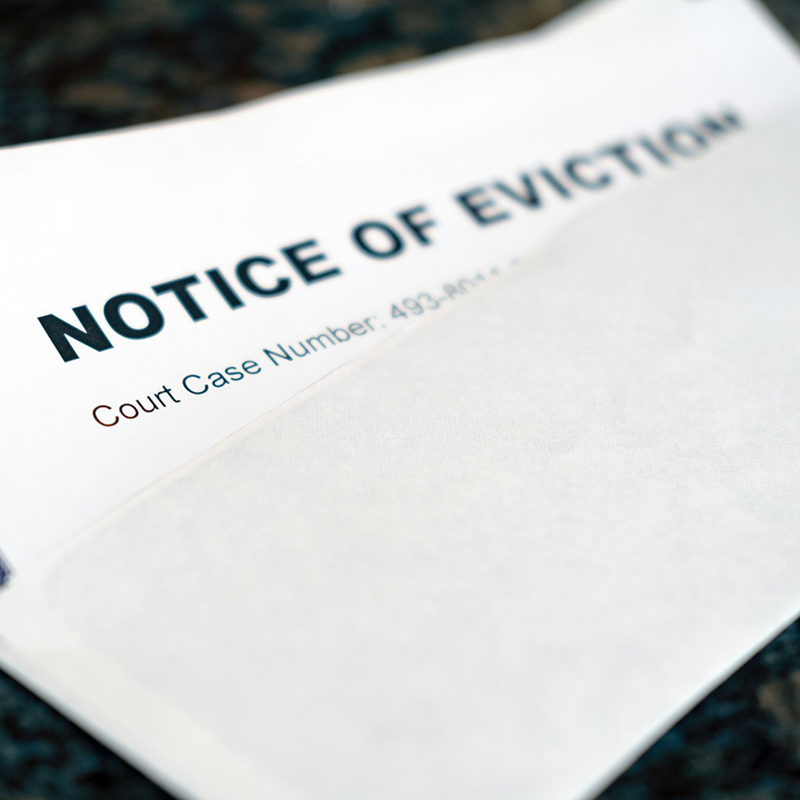
Your Rights As A Tenant
Owner- and relative-move-in evictions are strictly regulated to prevent abuse. When landlords exploit these rules, tenants have powerful remedies. Through careful investigation and aggressive litigation, Tobener Ravenscroft LLP holds landlords accountable and ensures that tenants are compensated for the devastating losses that come with wrongful eviction. If you believe you have been wrongfully evicted, please contact us today to speak with one of our attorneys.
What Constitutes a Wrongful Owner- or Relative-Move-In Evictions?
- The landlord or relative never intended to move in or acted with ulterior motives.
- The landlord or relative failed to move in within the required sixty to ninety days.
- The landlord or relative did not live in the unit as their principal place of residence for the required two to three years.
- The landlord or relative rented out all or part of the unit for profit, including short-term rental listings.
- The landlord failed to file the necessary eviction notices or occupancy statements with the local rent board.
- The landlord targeted long-term, low-rent tenants in order to replace them with higher-paying tenants.
- The landlord did not take advantage of comparable units that were vacant or were becoming vacant.
- The landlord moved in a more distant relative than allowed under the law.
- The property was owned by an LLC or corporation rather than an individual.
- The unit is left vacant or kept under construction for a significant time after the eviction.
Principal Place of Residence
Courts and rent boards closely scrutinize whether the owner or relative actually established the unit as their principal place of residence. Factors include where the person receives mail, the address on their driver’s license or DMV records, where they are registered to vote, utility usage, tax records, and where they spend most nights. Under Rent Board Rule 1.21, these indicators help prove whether the move-in was legitimate or merely a pretext to oust the tenant.
Courts also look to homeowner’s tax exemptions as powerful evidence of whether a landlord or relative is truly occupying a property as their principal residence. In California, an owner may only claim the homeowner’s exemption on one property at a time. If a landlord continues to claim the exemption on another home while asserting that they moved into the rental unit, that inconsistency strongly suggests bad faith. Likewise, failure to claim the exemption on the evicted unit can undermine a landlord’s claim that it became their primary home. Rent boards and courts frequently rely on these tax records as objective proof of intent.
Investigating Bad-Faith Evictions
Our law firm routinely investigates owner- and relative-move-in evictions. We hire private investigators to monitor whether landlords or relatives truly reside in the unit. Investigators conduct surveillance, check DMV registrations, trace mailing addresses, and identify whether the landlord owns or resides at other properties. We also review recorded documents, rent board filings, and eviction histories. Through this work, we often uncover ruses designed to force tenants out without any real intent to move in.
Tenants should be alert to warning signs that an owner- or relative-move-in eviction may not be legitimate. If there are warning signs, we will hire private investigators at our expense. Hints of bad faith include that other units were available at the time, the displaced tenant was the lowest rent tenant, the landlord already lives in another home, the landlord has a history of evicting long-term tenants, the eviction was timed to avoid elder and disabled tenant protections, neighbors state that the landlord or relative never moved in, the landlord did not file the correct paperwork with the city, and harassment preceded the eviction. More obvious red flags include listings on rental platforms like Airbnb or Zillow or permits pulled for major construction.
Damages for Wrongful Owner- or Relative-Move-In Evictions
The damages for tenants wrongfully displaced by an owner- or relative-move-in eviction are substantial. In rent-controlled jurisdictions, courts award tenants the lost future rental value of their homes. This is calculated as the difference between market rent and the rent-controlled rent, multiplied by the number of years the tenant reasonably expected to stay. California courts have approved awards covering up to twenty years of projected rent loss.
In Chacon v. Litke (2010), for example, the Court of Appeal upheld a $1.1 million award—three times twenty years of projected rent differential. Likewise, in Delisi v. Lam (2019), the court confirmed the validity of such calculations.
Under many rent ordinances, actual damages are tripled, and attorney fees and litigation costs are recoverable. In some jurisdictions, emotional distress damages are also subject to trebling when the landlord acts knowingly or with reckless disregard of tenant protections. Importantly, the jury is not told that its award will be automatically tripled, ensuring that landlords face the full weight of liability for their misconduct.
Conclusion
Owner- and relative-move-in evictions are strictly regulated to prevent abuse. When landlords exploit these rules, tenants have powerful remedies. Through careful investigation and aggressive litigation, Tobener Ravenscroft LLP holds landlords accountable and ensures that tenants are compensated for the devastating losses that come with wrongful eviction. If you believe you have been wrongfully evicted, please contact us today to speak with one of our attorneys.
Sample Awards for Owner- and relative-move-in evictions
$275,000
recovered on behalf of a family wrongfully evicted after enduring five years of severe habitability defects including rodent infestations, water damage, and a ceiling collapse. The landlord falsely claimed a relative would move in, but instead re-rented the unit unlawfully.
$275,000
recovered on behalf of a family wrongfully evicted from a rent-controlled apartment in Los Angeles County. The landlord ignored severe roof defects and pest infestations, harassed the tenants, and claimed a relative move-in to justify the eviction, then re-rented the unit.
$270,000
recovered on behalf of a mother and daughter evicted from their rent-controlled home under a false claim of a relative move-in. The unit was never occupied by the relative and was instead re-rented at a higher rate.
$500,000
recovered on behalf of a family evicted under false pretenses by a landlord who claimed an owner move-in but then sold the property for millions.
$290,000
recovered on behalf of a Los Angeles family evicted under false pretenses that the landlord’s parents would move in, but the unit was re-rented instead.
$300,000
recovered on behalf of an elderly Berkeley tenant evicted under a false owner move-in. The landlord never moved in but instead rented the unit at market rate.
$225,000
recovered on behalf of a tenant illegally locked out of his Los Angeles unit. The landlord falsely claimed he had moved out and rented to someone else without offering the unit back.
Contact Our Tenant Lawyers
We’re here to help. Call us to speak to a tenant lawyer or message us now.

